
Category: In the News

woman wearing overalls and young boy in striped shirt harvesting a giant lettuce in a community garden

Community Gardens: Enhancing Nutrition, Physical Activity and Connection in Neighborhoods Across America

Gardening goes in and out of fashion over time, but the COVID-19 pandemic ushered in a new, younger wave of gardeners, many of whom grow in one of the more than 29,000 community garden plots located in city parks in the 100 largest U.S. cities. Community gardens have many benefits, including promoting healthy eating and physical activity, improving mental health and building social connections. With its many advantages, you could consider community gardening a “superfood” of activity. 

One of the most obvious benefits of community gardens is that they increase access to healthy foods. In fact, adults who participate in community gardening eat more fruits and vegetables than those who don’t garden. By growing their own produce, gardeners can specifically plant foods that they like to eat as opposed to being restricted  to what’s available in grocery stores. This is especially important in low-income neighborhoods where access to fresh fruits and vegetables may be limited. Food insecurity, or the limited access to nutritionally adequate food, affects an average of 11.5% of residents in the largest 100 US cities. Community gardens are an important tool to seasonally reduce food insecurity concerns up to 90% in impacted communities. 

Community gardens also promote physical activity. Gardening is a whole-body activity that can burn the same number of calories as a traditional workout. Plus you get the added benefit of time spent in nature! Typical gardening tasks like digging, raking, lifting and squatting are excellent at burning calories, strengthening muscles and increasing physical fitness. Depending on the task, gardening can be a low- to moderate-intensity activity that helps meet the ACSM recommendation for 150 minutes of physical activity each week 

In addition to physical health benefits, community gardens help improve mental health and social connections. Studies have shown that gardening  reduces stress and anxiety and promotes a sense of well-being. Community gardening, in particular, can decrease feelings of isolation and boost self-esteem. These gardens provide a space for people to connect with others and to work collaboratively. This is especially important for people who may be isolated or have limited social networks. 

How can you get involved in a community garden? 

The first step to getting involved is to find a garden in your area. Many cities have organized community garden programs that can help you find local garden plots, lend you tools or teach you how to garden. Local libraries, extension offices and community-based organizations are also great resources for finding community gardens and learning how to grow. (Pro tip: check with your local library to see if they have a seed bank that gives free seeds to library card holders.) Make sure to sign up early since some community gardens fill up quickly!  

If you don’t have a community garden in your area, consider starting one. Talk to your neighbors, local organizations or city officials about the benefits of community gardens and how you can start one in your neighborhood. You may be surprised at how many people are interested in getting involved and how much support you can get from your local community. 

Spring is the perfect season to get your hands dirty and start growing fresh fruits and vegetables. Whether you’re a seasoned gardener or a beginner, there’s a welcoming place for you in a community garden. So, what are you waiting for? Get out there and start gardening!


Author:  Gretchen Patch, MPH, CPH (Avid gardener and big supporter of extension offices 😊)

Senior Director  of Strategic Health Initiatives and Partnerships, ACSM

one male and two female coworkers walking and talking outdoors on a nice day

Economic Benefits of Workplace Wellness Programs and Changes since COVID-19

Since the start of the COVID-19 pandemic, more employees have shifted to hybrid and remote work in office work, telehealth, information technology, education and other fields; however, there are many jobs that cannot be performed remotely, such as transportation, hospitality, manufacturing, food service, supermarket and other retail work and the majority of healthcare positions. Therefore, workplace wellness programs need to change along with these shifts in the workplace environment. After all, encouraging more employees to be physically active has social, environmental and economic benefits. 

Physical inactivity has a high cost burden to employers — an estimated $300 billion between 2020 and 2030, according to the World Health Organization (WHO) global status report on physical activity — with even more cost if physical inactivity is not addressed. Inability to address physical inactivity will result in increased chronic diseases as well as declining mental health, and higher-income countries like the United States will incur a larger economic burden. Since half of the world’s population is of working age, the cost of chronic disease and injuries could be as much as 4-6% of global gross domestic product (GDP). Unfortunately, these projections may be conservative, and actual costs may be higher.  

In a recent study, people who met physical activity guidelines of at least 150 minutes per week were found to have lower healthcare utilization, with fewer emergency room visits, hospital admissions and primary care visits compared to those who did not meet the guidelines. Likewise, seniors who participated in a SilverSneakers exercise program had over $2,000 per year savings in healthcare costs compared to nonparticipants. A RAND Corporation study of 50,000 workers reported that for every $1 invested in managing chronic diseases, the employer saved $3.78, but there was less immediate return for just general employee lifestyle management. Seven years of employee engagement in both chronic disease and lifestyle programs led to $30 reduced healthcare costs per month per employee.   

The aforementioned WHO report recommends both government and private sector workplaces provide opportunities for employees to be active during the day as well as promote active transportation methods such as public transit, walking and bicycling. Both strategies can provide good return on investment, contribute to increased productivity, and reduce injuries and missed work.  

In the release of the ACSM Worldwide Survey of Fitness Trends for 2023 there was little support for workplace incentives for physical activity or any other trend mentioning employer-based physical activity in the top 20 trends. It appears that traditional workplace wellness and employer sponsored programs may be falling out of favor following COVID-19. This is unfortunate given the projected economic costs of chronic disease and mental health caused by failing to address physical activity. Some employers may have shifted away from traditional workplace fitness and wellness programs and are now evaluating more programs that look at overall well-being, such as work-life balance, stress management and mental health, as well as promoting flexible physical activity options for onsite, hybrid and remote workers.  

Governments and industry may want to collect prospective data on their employee physical activity and well-being so they can analyze their economic impact, especially following changing workplace environments due to COVID-19. The Physical Activity Alliance advocates for assessing physical activity at work using standardized measures and encouraging CEOs to sign a physical activity pledge to make physical activity a workplace cultural norm. Finally, employers can implement workplace policies to promote physical activity and overall employee well-being. 


AUTHOR: Janet R. Wojcik, Ph.D., FACSM, is professor and program director of exercise science at Winthrop University in Rock Hill, South Carolina. She is a member of the ACSM American Fitness Index Advisory Board and the Physical Activity Policy Research and Evaluation Network (PAPREN) worksite work group.    

three people locking bikes to a bike rack

Activity Friendly Spaces Make Good Business “Cents”: How Local Businesses can Support and Advocate for Pedestrians and Cyclists

Without question, activity friendly spaces—those that support walking and bicycling for leisure and transportation—are good for both personal health and the environment. When trips that are usually taken via automobile are taken by foot or bike instead, there is reduced traffic, congestion and pollution. But are these spaces good for businesses? You can bet your bottom dollar they are.   

Research supports the idea that activity friendly spaces can drive economics and spending. Several studies have noted that customers who arrive via bike tend to frequent commercial areas more often than customers who arrive via other modes, and they often spend more, resulting in higher sales.1-5  In New York City, the installation of a bike lane increased the likelihood of travel for both pedestrians and cyclists, creating greater exposure to businesses in the area studied4 and contributed to an increase in retail sales and fewer commercial vacancies in the neighborhood.6 A survey of San Francisco retailers revealed that the majority (65%) perceived that bike lanes had a positive impact on their sales and noted few negatives.7 Communities designed to promote active living (i.e. provisions for pedestrians and cyclists, greenspace, trails) also are noted to have greater property values and result in greater revenue from property taxes than communities that do not include these features.8 Areas with greater walkability and active living supports are tied to the benefits of decreased pollution, improved social capital, more community activism and less car use, which was related with improved office, retail and apartment values.9  

Promoting walking or bicycling to work offers significant benefits to employers; the many health benefits associated with biking and regular exercise include decreased healthcare costs, improved productivity, reduced absenteeism and aligns with the goals of most worksite wellness programs.10 The League of American Bicyclists, as a part of their Bicycle Friendly AmericaTM11 program, has a Bicycle Friendly BusinessTM initiative which allows businesses to apply to be recognized as bicycle friendly at different levels (bronze, silver, gold or platinum). League-recognized Bicycle Friendly Businesses have noted a wide range of motivation for promoting cycling among their employees and customers (e.g. economic outcomes, reduced healthcare costs, sustainability goals12 ). They have also noted the importance of serving as a good example for their community and that cycling represents a core part of their company’s identity.  

Other strategies that local businesses can employ to promote active transportation can include participation in advocacy for infrastructure that encourages walking and biking. Partnering with local pedestrian and cyclist coalitions or advocacy groups to support policies, legislation or funding for capital improvements to local spaces can be helpful, as buy-in from additional stakeholders bolsters confidence in those policies. For example, advocating for greater bicycle parking may result in some controversy if it is accompanied by the elimination of car parking spots. However, initiatives to replace on-street parking in commercial districts with a bike corral typically yields spots for 8-10 bikes where one car could have parked. It has been well documented that this swap typically does not harm sales, rather, it can lead to an increase in revenue.13 After seeing the impact in other areas, merchants in Portland, OR, indicated their overwhelming support for the swap to improve business and enhance the overall streetscape.14 Additionally, increased spending in a commercial area could generate greater sales tax for the region, helping the community to pay for the installation and upkeep of the supportive infrastructure, possibly leading to expanded efforts. 

Businesses have an important role to play in cultivating activity-friendly spaces as key stakeholders in local economies. The potential for impact beyond commercial benefit is substantial, influencing health and environmental outcomes throughout the community where they live and work. Investments in cycling and pedestrian infrastructure just make good “cents” for businesses.  


Author: Melissa Bopp, Ph.D., FACSM 


References

  1. Popovich N, Handy SL. Bicyclists as Consumers. Mode Choice and Spending Behavior in Downtown Davis, California. Transportation Research Record. 2014;2468:47-54.
  2. Clifton KJ, Muhs C, Morrissey S, Morriss T, Currans K, Ritter C. Consumer Behavior and Travel Mode Choices. Portland, OR: Oregon Transportation Research and Education Consortium (OTREC); 2012.
  3. Bent E, Singa K. Modal Choices and Spending Patterns of Travelers to Downtown San Francisco, California: Impacts on of Congestion Pricing on Retail Trade. Transportation Research Record: Journal of the Transportation Research Board. 2009;2115:66-74.
  4. Bernier-Heroux L, Ryan J. East Village Shoppers Study: A Snapshot of Travel and Spending Patterns of Residents and Visitors in the East Village. 2012; https://www.transalt.org/cdn/farfuture/9efumRfRqlXm_tZbqTYHclU2lQLb2uDlCiQiGakdKms/mtime:1472894797/sites/default/files/news/reports/2012/EV_Shopper_Study.pdf. Accessed November 16, 2016.
  5. Rowe K. Bikenomics: Measuring the Economic Impact of Bicycle Facilities on Neighborhood Business Districts. Seattle, WA: University of Washington College of Built Environments; 2013.
  6. Arancibia D. Cyclists, Bike Lanes and On-Street Parking: Economic Impacts. Toronto, ON: Toronto Cycling; 2013.
  7. Drennan E. Economic Effects of Traffic Calming on Urban Small Businesses. 2003; http://www.sfbike.org/download/bikeplan/bikelanes.pdf. Accessed November 17, 2016.
  8. Active Living Research. The Economic Benefits of Open Space, Recreation Facilities and Walkable Community Design. San Diego: Robert Wood Johnson Foundation; 2010.
  9. Pivo G, Fisher JD. The Walkability Premium in Commercial Real Estate Investments. Real Estate Economics. 2011;39(2):185-219.
  10. Tran M, Forst L, Buchanan S. Not on the Radar: Active Commuting as a Workplace Wellness Issue. Journal of Occupational and Environmental Medicine. Sep 2015;57(9):E91-E92.
  11. League of American Bicyclists. Building A Bicycle Friendly America. Washington DC: League of American Bicyclists; 2013.
  12. Vairo N, Bopp M, Sims D. Best practices for businesses promoting bicycling. International Journal of Health Promotion and Education. 2017/11/02 2017;55(5-6):298-310.
  13. Lee A, March A. Recognising the Economic Role of Bikes; Sharing Parking in Lygon Street, Carlton. Australian Planner. 2010;47(2):85-93.
  14. Meisel D. Bike Corrals: Local Business Impacts, Benefits, and Attitudes. Portland, OR: Portland State University School of Urban Studies and Planning; 2010.
man in bed grabbing his head, frustrated that he cannot sleep

The Role of Stress in Sleep Quality

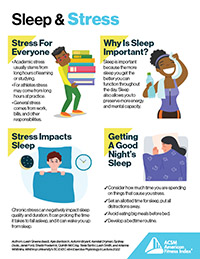
Have you ever gone to sleep at night and woke up the next day feeling groggy and unrested? Or not be able to fall asleep at all due to stress? The need for and benefits of quality sleep cannot be overemphasized, but how can people actually get to a point where they are reaching adequate sleep? What actions can an individual take to ensure a full night’s rest? Research suggests that there are multiple ways to help get a good night’s sleep and reduce stress in doing so (good sleep hygiene). We’ll discuss some stress-related reasons individuals struggle to get adequate sleep, and some research-backed sleep hygiene recommendations to combat those challenges.  

Daily stress can have an impact on an individual’s sleep schedule, and persistent stress can contribute to the development of sleep disorders. It is estimated that 10-30% of adults are diagnosed with insomnia, a sleep disorder in which it is difficult for an individual to fall asleep, stay asleep or return to sleep after waking up. Whether short- or long-term, the effects of insomnia include excessive daytime sleepiness, fatigue, irritability and other impairments while awake. Stress-induced sleeping disorders such as insomnia are commonly seen in college students, especially student-athletes who may struggle to balance the various demands on their time and energy. When this stress disrupts sleep, it can have an impact on students’ academic  performance, mood and athletic performance. For individuals of all ages, the continuation of interrupted sleep will not only take a toll on the individual and their own body, but those around them will begin to experience the effects as well. 

The hypothalamic-pituitary-adrenal (HPA) axis is one of the main neuroendocrine systems active during sleep. Stress-related insomnia activates the HPA. When the HPA is activated as a defensive mechanism to maintain homeostasis, it results in the release of corticotropin-releasing hormone (CRH), adrenocorticotropic hormone (ACTH), cortisol, epinephrine and norepinephrine, which are associated with attention and arousal. Since the hypothalamus plays a key role in sleep regulation, studying it allows researchers to understand the neural mechanisms of sleep disorders, see how each body system is affected, and develop interventions for better sleep. 

Some types of stress can develop into mental disorders such as Post-Traumatic Stress Disorder (PTSD) and/or depression. PTSD is a condition caused by severe trauma and can affect people of all age groups. Increased levels of Interleukin-6 (IL-6) and C-reactive protein (CRP) in the body are often a sign of stress. These inflammatory markers have been found to be directly linked to symptoms of depression, especially when sleep quality is poor. Overall, individuals who have been diagnosed with a mental disorder often are characterized by their exhaustion levels and the lack of the ability to get proper sleep. 

Awareness of the connection between stress and sleep is the first step in making positive lifestyle changes. Some of the most recommended methods of sleep hygiene are having a consistent pre-sleep routine, a steady bedtime paired with a consistent wake time, developing a bedtime routine such as limiting caffeine intake and screens 90 minutes before bedtime and only using a bed for sleeping. Specific recommendations to reduce stress to assist with better sleep are to participate in regular physical activity (at least 30 minutes per day, 3-5 days per week), using relaxation and deep breathing techniques and participation in other behavioral stress management activities.  The goal behind all these methods is to train the brain to associate similar circumstances and times with sleep and in doing so, making it easier to fall asleep. These methods, when combined, can really make a noticeable and positive difference in an individual’s sleep patterns.  

Treatment for stress-related sleep disorders for athletes at all levels is similar to treatment for the general population, but the athletes’ sport-specific needs should be kept in mind. Napping is a common sleep disorder intervention, particularly among student-athletes, but the findings are mixed with respect to athletic performance. 


Want to learn more about the connection between sleep and athletic performance? Check out  this online course: Sleep Tactics for Better Performance.


Authors: Nicole Weiss (lead), River Anderson, Serenity Collier, Vivian Gardner, Reid Moser, Christian Peters, John Hampton Ratcliffe, Paolo Tedesco 

Winthrop University, Rock Hill, SC EXSC 484 Exercise Physiology II Lecture, Fall 2022 

Instructor: Janet R. Wojcik, Ph.D., FACSM 


group of 4 people hiking in cold weather

Get Active to Combat Stress this Holiday Season

Feeling overwhelmed at the thought of the holiday season? You are not alone. Seasonal illnesses, end-of-year work pressures, potential holiday tension and cold weather challenges can add up this time of year, and can  all lead to negative physical and mental health outcomes. Unchecked stress can contribute to high blood pressure and heart disease as well as increased anxiety and depression. In fact, in the 2022 Fitness Index, 30% of residents in the largest 100 U.S. cities have high blood pressure and 39.6% reported poor mental health. Adding seasonal stress to that mix is not a winning recipe.

A key (and free) way to reduce stress and anxiety is to be physically active. Research tells us even small amounts of activity can help reduce stress, enhance your mood, improve sleep and even strengthen your immune system – something we can all use this time of year! Even a 30-minute brisk walk provides immediate immune benefits that can last for several hours afterwards. Every active minute counts and can add up to better health.

What counts as physical activity? A lot actually! You do not have to prove you are an Ironman champion and go all out over the holidays. Moderate-intensity activities that allow you to talk, but not sing, during the activity are an ideal place to start. Walk the dog. Dance with your partner. Play catch with your kids. Ride your bike to the store. Even household chores like raking leaves, vacuuming and lifting laundry baskets will rack up activity minutes. Looking for a structured workout option? Check out this  video playlist of free workouts  from ACSM’s International Health & Fitness Summit.

Want more out of your activity? Take it outside. Being active in nature amplifies the reduction in stress and anxiety and reduces blood pressure. Walk down a tree-lined street, be active in your backyard or find a local park or green space. Be sure to treat nature gently – stay on designated trails, take your trash home with you and leave plants and animals exactly where you see them.

For more information on the connection between physical activity and mental health, or for more mental health resources, check out ACSM’s Mental Health Resource Page.

Fitness Professionals

In the lead-up to, during and following the holiday season, your clients are likely dealing with additional stress. Check out this blog and handout to learn about ways to support both your clients’ mental and physical well-being.

For even more in-depth information and tools, check out ACSM’s Health & Fitness Journal®’s 2020 article of the year, “Promoting Physical Activity for Mental Well-Being” by Stephanie Cooper, Ph.D., FACSM, ACSM-EP.

From all of us at the American Fitness Index, we wish you a happy and healthy holiday season!

pillows on a scale

Don’t “Weight” to Focus on a Good Night’s Sleep

I am a poor sleeper. I am not the only one: The CDC reports one third of the U.S. population does not get the recommended amount of sleep. I recently decided to redouble my efforts to get more sleep. I am generally healthy, as I eat well and exercise regularly, so I primarily focused on improving my sleep hygiene (avoiding food/alcohol close to bedtime, consistent sleep times, relaxation techniques and a dark, cool room). For more severe sleep issues, talk to your doctor about other options, including pharmacotherapy, cognitive behavior therapy and non-invasive brain stimulation techniques (6).  

As I began to get more sleep, I noticed I was losing a few pounds. It wasn’t dramatic, but it was those couple extra pounds I had had a difficult time getting rid of. Especially with approximately 42% of the U.S. population now considered obese, I had to explore the relationship between sleep and body weight. 

It is well known that sleep is very important to our physical and mental health (more on the mental health side in next month’s blog). Sleep is not only measured in total sleep time (quantity), but also in quality (number of disturbances/awakenings, minutes awake after sleep onset and percent of time asleep). Ideal sleep amounts for adults are 7-9 hours (higher for children) with less than six awakenings, less than 30 minutes awake after sleep onset and 85% of time asleep (3). Between-day variability also plays a role, with increased variability contributing to lower-quality sleep. Sleep research varies in terms of measurement of sleep, ranging from self-report (e.g., Pittsburg Sleep Quality Index) to actigraphy or wearable device to the gold standard of a polysomnogram. Poor sleep increases the risk of chronic diseases and conditions such as cardiovascular disease, obesity, Type 2 diabetes, some cancers and depression, as well as poor performance in school, work, athletics and while driving. I discovered there is a reciprocal and complex relationship (and which varies by gender, age and race) between sleep quality/quantity and body weight.   

Insufficient sleep negatively impacts metabolism and is associated with increased body mass index (BMI), abdominal body fat and obesity. There are several mechanisms involved, including systemic inflammation, hormonal and metabolic changes and behavioral issues (11). Inflammation increases risk of cardiometabolic disease risk and hypertension, and decreases insulin sensitivity. Changes in the neuroendocrine system include increased ghrelin and orexin-A and decreased leptin, leading to increased appetite and hunger (9). With decreased sleep, there is a tendency towards increased energy intake due to associated behaviors such as increased secondary (not at mealtime) late-night eating and disinhibited (distracted) eating (4,13). These changes in sleep and food intake can also contribute to circadian misalignment, which further disrupts sleep (2). Increased daytime sleepiness may also decrease physical activity. We also see obesity (body weight gain) causing poor sleep due to comorbidities such as hypertension, pain, sleep apnea or exacerbated menopausal symptoms (1,12). 

There is also a positive bidirectional relationship between sleep and body weight change. Body weight loss is associated with improved sleep, and improved sleep is associated with body weight loss (10,14). Body weight loss often coincides with healthy behaviors such as increased physical activity and improved nutrition/eating patterns, which can contribute to improved sleep. Weight loss may also contribute to decreased pain, thus decreasing sleep disturbances. Better sleep health was associated with greater weight and fat loss with a weight-loss intervention (7). Optimizing sleep during a resistance training program provided body composition benefits of higher muscle mass and lower fat mass compared to resistance training alone (5).  

There is still much to learn about the complex connections between sleep and body weight, but this all sounds promising. As I approach the potential for weight gain associated with middle age and menopause, I will continue to include a healthy diet and varied physical activity — and you can bet I will be keeping sleep a priority.  


Author: Melissa W. Roti, Ph.D., FACSM

Professor, Director Exercise Science Program

Westfield State University, Westfield, Massachusetts

Twitter: @MelissaRoti 


References 

  1. Al-Safi ZA, Polotsky AJ. Obesity and menopause. 2015;29(4):548-53. 
  2. Barot N, Barot I. Nutrition and Sleep. In: Encyclopedia of Sleep. 2013. p. 108-13.  
  3. Berger AM et al. Sleep wake disturbances in people with cancer and their caregivers: state of the science Oncol Nurs Forum. 2005;32(6):E98-126. 
  4. Blumfield ML, Bei B, Zimberg IZ, Cain SW. Dietary disinhibition mediates the relationship between poor sleep quality and body weight. Appetite. 2018;120:602-8. 
  5. Jåbekk P, Jensen RM, Sandell MB, Haugen E, Katralen LM, Bjorvatn B. A randomized controlled pilot trial of sleep health education on body composition changes following 10 weeks’ resistance exercise. The Journal of Sports Medicine and Physical Fitness. 2020;60(5):743-8. 
  6. Jackowska M, Koenig J, Vasendova V, Jandackova VK. A two-week course of transcutaneous vagal nerve stimulation improves global sleep: Findings from a randomised trial in community-dwelling adults. Auton. Neurosci. 2022;240:102972. 
  7. Kline CE et al. The association between sleep health and weight change during a 12-month behavioral weight loss intervention. Int J Obes. 2021;45:639-49.  
  8. Leger D, Bayon V, Sanctis A. The role of sleep in the regulation of body weight. Molecular and Cellular Endocrinology. 2015;418(2):101-7. 
  9. Littman AJ et al. Sleep, ghrelin, leptin and changes in body weight during a 1-year moderate intensity physical activity intervention. International J Obesity. 2007;31:466-75. 
  10. O’Brien EM et al. Sleep duration and weight loss among overweight/obese women enrolled in a behavioral weight loss program. Nutrition & Diabetes 2:e43. 
  11. Schmid SM, Hallschmid M, Schultes B. The metabolic burden of sleep loss. The Lancet Diabetes & Endocrinology. 2015;3(1):52-62. 
  12. Shade MY, Berger AM, Dizona PJ, Pozehl BJ, Pullen CH. Sleep and health-related factors in overweight and obese rural women in a randomized controlled trial. J Behav Med. 2016;39:386-97. 
  13. Tajeu GS, Sen B. New pathways from short sleep to obesity? Associations between short sleep and “secondary” eating and drinking behavior. Amer J Health Promotion. 2017;31(3):181-8. 
  14. Thomson CA et al. Relationship between sleep quality and quantity and weight loss in women participating in a weight-loss intervention trial. Obesity. 2012;20:1419-25. 
blue clock on yellow background with "Z Z Z" in white

Should I Sleep or Exercise? The Relationship between Sleep and Activity

Daily sleep and physical activity each have individual impacts on a variety of health outcomes and risk factors (1,2,3). There may be reciprocal relationships between sleep and physical activity, but the extent of these relationships remains unclear. Common questions include: Does sleep duration affect physical activity intensity or duration? How much sleep loss can one tolerate and not affect physical activity? What is the best time of day to exercise? Given my time constraints, should I sleep or exercise? Researchers do not yet have all the answers to these questions, but the answer to the final question may simply be “both.” 

Sleep & Health 

Adequate sleep is necessary for all major physiological systems, including immune, endocrine and metabolic function (4,5,6). Meeting sleep guidelines (7-9 hours per night for most adults [6]) is consistently associated with beneficial physical health outcomes, including but not limited to, enhanced cognition, decreased risk for cardiovascular disease and Type 2 diabetes, and prevention of some types of cancer (5). Moreover, meeting sleep guidelines is associated with decreased psychological distress, anxiety and depression, longevity, and health-related quality of life (7). Of concern, data from the 2004-2017 National Health Information Survey and 2014 United States Behavioral Risk Factor Surveillance Survey suggest 30-35% of U.S. adults obtain less than the recommended seven hours of sleep per night (8,9). Moreover, an estimated 56% of U.S. adults live with sleep disorders, which is higher than similarly developed regions of the world (10). 

The negative impacts of sleep deprivation and sleep restriction on several health outcomes have been well documented (11,12). While many of us may not experience sleep deprivation (e.g., total loss of sleep) or chronic sleep restriction (e.g., partial nighttime sleep loss over multiple weeks, months or years), acute sleep restriction is a relatively common experience. Acute sleep restriction is commonly defined in experimental studies as a reduction in total sleep time to less than six hours of sleep per night over a single night or several nights. Obtaining less than six hours of sleep on just a single night impairs following-day cognition, including negative effects on memory (13,14), inhibitory control (15), executive function (13) and reaction time (14,16,17,18). 

Sleep & Physical Activity 

Similar to the health benefits associated with meeting sleep recommendations, meeting the 2018 ACSM Physical Activity Guidelines can reduce the risk of developing at least seven of the 10 most common chronic diseases in the United States (19). However, only 51% of American adults meet aerobic physical activity guidelines (20). Given the large portion of the population that does not meet sleep or physical activity guidelines, the next logical question to ask is “What are the relationships between these physical behaviors?” 

Most of the evidence exploring the reciprocal relationship between sleep and physical activity comes from cross-sectional and laboratory-based exercise studies (e.g., effect of sleep restriction on exercise performance). The results of cross-sectional studies are largely inconclusive, which is likely due to the wide range of subjective measurements used. Conversely, laboratory-based studies have more commonly demonstrated a negative impact of sleep restriction on subsequent exercise performance (21,22). Sleep restriction appears to be most detrimental for subsequent sub-maximal aerobic performance bouts lasting more than a couple of minutes. 

More recent research has attempted to extend these previous findings by experimentally altering sleep duration to better understand how one behavior affects another (e.g., how does a night of short sleep [3 hours] affect subsequent days of physical activity?). Some studies have demonstrated no effect of sleep restriction on light, moderate or vigorous physical activity (23,24), while others reported a reduction in physical activity (25,26,27). One comprehensive study explored the effects of two different types of sleep restriction (delayed-onset sleep restriction [going to bed in the middle of the night] and early awakening sleep restriction [waking up in the middle of the night]) on accelerometer-derived physical activity compared to a normal night of sleep in healthy adult men (26). Interestingly, the results indicated a significant reduction in total physical activity only under the early awakening sleep restriction condition, which was driven by reduced vigorous-intensity physical activity. These data suggest that the timing of sleep restriction, as well as physical activity intensity, are important considerations when understanding the relationships between these physical behaviors. 

While there are clear benefits to meeting individual sleep and physical activity guidelines, several questions about the relationships between these physical behaviors remain. A better understanding of the complex relationships between sleep, physical activity and sedentary behaviors will provide clinicians and health professionals with tools to better council patients from a holistic health perspective. 

Authors: John D. Chase, M.S., and John R. Sirard, Ph.D. 

References 

  1. Dzierzewski JM, Buman MP, Giacobbi PR, Roberts BL, Aiken-Morgan AT, Marsiske M, McCrae CS. Exercise and sleep in community-dwelling older adults: Evidence for a reciprocal relationship. J Sleep Res. 2014;23:61-68. doi:10.1111/jsr.12078.
  2. Chennaoui M, Arnal PJ, Sauvet F, Léger D. Sleep and exercise: A reciprocal issue? Sleep Med Rev. 2015;20:59-72. doi:10.1016/j.smrv.2014.06.008.
  3. Mead MP, Baron K, Sorby M, Irish LA. Daily associations between sleep and physical activity. Int J Behav Med. 2019;26:562-8. doi:10.1007/s12529-019-09810-6.
  4. Santos RVT, Tufik S, De Mello MT. Exercise, sleep and cytokines: Is there a relation? Sleep Med Rev. 2007;11:231-9. doi:10.1016/j.smrv.2007.03.003.
  5. Watson NF et al. Joint consensus statement of the american Academy of Sleep Medicine and Sleep Research Society on the recommended amount of sleep for a healthy adult: Methodology and discussion consensus. Sleep. 2015;38:1161-83.
  6. Hirshkowitz M et al. National Sleep Foundation’s sleep time duration recommendations: Methodology and results summary. Sleep Heal. 2015;1:40-43. doi:10.1016/j.sleh.2014.12.010.
  7. Loprinzi PD, Joyner C. Meeting sleep guidelines is associated with better health-related quality of life and reduced premature all-cause mortality risk. Am J Heal Promot. 2018;32;68-71. doi:10.1177/0890117116687459.
  8. Sheehan CM, Frochen SE, Walsemann KM, Ailshire JA. Are U.S. adults reporting less sleep? Findings from sleep duration trends in the National Health Interview Survey, 2004-2017. Sleep. 2019;42:1-8. doi:10.1093/sleep/zsy221.
  9. Liu Y, Wheaton AG, Chapman DP, Cunningham TJ, Lu H, Croft JB. Prevalence of healthy sleep duration among adults – United States, 2014. CDC Morb Mortal Wkly Rep. 2016;65:137-41. doi:10.15585/mmwr.mm6506a1.
  10. Léger D, Poursain B, Neubauer D, Uchiyama M. An international survey of sleeping problems in the general population. Curr Med Res Opin. 2008;24:307-17. doi:10.1185/030079907X253771.
  11. Banks S, Dinges DF. Behavioral and physiological consequences of sleep restriction. J Clin Sleep Med. 2007;3:519-28. doi:10.1055/s-0029-1237117.
  12. Vgontzas AN, Zoumakis E, Bixler EO, Lin H, Follett H, Kales A, Chrousos GP. Adverse effects of modest sleep restriction on sleepiness, performance, and inflammatory cytokines. J Clin Endocrinol Metab. 2004;89:2119-26. doi:10.1210/jc.2003-031562.
  13. Lo JC, Ong JL, Leong RLF, Gooley JJ, Chee MWL. Cognitive performance, sleepiness, and mood in partially sleep deprived adolescents: The need for sleep study. Sleep. 2016;39:687-98. doi:10.5665/sleep.5552.
  14. Alhola P, Polo-Kantola P. Sleep deprivation: Impact on cognitive performance. Neuropsychiatr Dis Treat. 2007;3:553-67. doi:10.1016/j.smrv.2012.06.007.
  15. Fallone G, Acebo C, Arnedt TA, Seifer R, Carskadon MA. Effects of acute sleep restriction on behavior, sustained attention, and response inhibition in children. Percept Mot Skills. 2001;93:213-29.
  16. Rossa KR, Smith SS, Allan AC, Sullivan KA. The effects of sleep restriction on executive inhibitory control and affect in young adults. J Adolesc Heal. 2014;55:287-92. doi:10.1016/j.jadohealth.2013.12.034.
  17. Van Dongen H, Maislin G, Mullington J, Dinges D. The cumulative cost of additional wakefulness: Dose-response effects on neurobehavioral functions and sleep physiology from chronic sleep restriction and total sleep deprivation. Sleep. 2003;26:117-26. doi:10.1001/archsurg.2011.121.
  18. Taheri M, Arabameri E. The effect of sleep deprivation on choice Reaction time and anaerobic power of college student athletes. Asian J Sports Med. 2012;3:15-20.
  19. Ward BW, Schiller JS, Goodman RA. Multiple chronic conditions among us adults: A 2012 update. Prev Chronic Dis. 2014;11:4-7. doi:10.5888/pcd11.130389.
  20. Schiller JS, Lucas JW, Peregoy JA. Summary health statistics for U.S. population: National health interview survey, 2011. National Center for Health Statistics. Vital Heal Stat. 2012;10:1-218.
  21. Fullagar HK, Skorski S, Duffield R, Hammes D, Coutts AJ. Sleep and athletic performance: The effects of sleep loss on exercise performance, and physiological and cognitive responses to exercise. Sport Med. 2014:1-26. doi:10.1007/s40279-014-0260-0.
  22. Chase JD, Roberson PA, Saunders MJ, Hargens TA, Womack CJ, Luden ND. One night of sleep restriction following heavy exercise impairs 3-km cycling time-trial performance in the morning. Appl Physiol Nutr Metab. 2017:42. doi:10.1139/apnm-2016-0698.
  23. Romney L, Larson MJ, Clark T, Tucker LA, Bailey BW, LeCheminant JD. Reduced sleep acutely influences sedentary behavior and mood but not total energy intake in normal-weight and obese women. Behav Sleep Med. 2016;14:528-38. doi:10.1080/15402002.2015.1036272.
  24. Brondel L, Romer MA, Nougues PM, Touyarou P, Davenne D. Acute partial sleep deprivation increases food intake in healthy men. Am J Clin Nutr. 2010;91:155-9. doi:10.3945/ajcn.2009.28523.
  25. Schmid SM, Hallschmid M, Jauch-Chara K, Wilms B, Benedict C, Lehnert H, Born J, Schultes B. Short-term sleep loss decreases physical activity under free-living conditions but does not increase food intake under time-deprived laboratory conditions in healthy men. Am J Clin Nutr. 2009;90:1476-82. doi:10.3945/ajcn.2009.27984.
  26. Wilms B, Kuhr M, Chamorro R, Klinsmann N, Spyra D, Mölle M, Kalscheuer H, Schultes B, Lehnert H, Schmid SM. Chronobiological aspects of sleep restriction modulate subsequent spontaneous physical activity. Physiol Behav. 2020;215:112795. doi:10.1016/j.physbeh.2019.112795.
  27. Bromley LE, Booth JN, Kilkus JM, Imperial JG, Penev PD. Sleep restriction decreases the physical activity of adults at risk for type 2 diabetes. Sleep. 2012;35:977-84. doi:10.5665/sleep.1964.


teen boy walking with a backpack

Physical Activity, Healthy Weight, and National Security

When Sports Illustrated subscribers thumbed through the final issue of 1960, they encountered the usual assortment of sporting news. Bart Starr led the Packers past the Rams at Los Angeles Memorial Coliseum. The Indiana men’s basketball team continued their winning ways, breezing by Missouri and Nevada on the shoulders of Walt Bellamy. But the sportswriters were overshadowed by someone more famous, the President-elect of the United States.

In “The Soft American,” an op-ed as provocative as its title, John F. Kennedy railed against the declining physical fitness of the American people. He warned that vehicle-focused transportation and television-focused recreation were displacing the active pursuits of an earlier age. After championing the link between physical activity and mental health, he wrote that “physical fitness is as vital to the activities of peace as to those of war.” But Kennedy’s primary focus was national security: our nation must be physically prepared to meet the demands of armed conflict.

Six decades on, how are we doing?

To investigate how the nation is doing 60 years later, we partnered with American College of Sports Medicine members who have expertise in military medicine. We used data collected from January 2015 through March 2020 by the National Health and Nutrition Examination Survey (NHANES) to assess the physical preparedness of the US civilian population. NHANES provides information about the health of Americans through a combination of personal interviews and direct physical examination.

We found that only 47% of the military-aged population (17–42 years) had a body mass index (BMI) within the eligible range for military entrance (19.0–27.5 kg/m2). Unlike previous studies of physical preparedness, we did not limit the investigation to height and weight, because an eligible BMI does not guarantee a person will be ready for the physical demands of initial military training. Lower amounts of physical activity before training are associated with higher rates of musculoskeletal injury during training and medical discharge from training. These are costly outlays—to the individual and to the armed forces.

Therefore, we also determined the proportion of people getting adequate physical activity in the military-aged population. We defined adequate physical activity as reporting the equivalent of at least 300 minutes per week of moderate-intensity aerobic physical activity. (This corresponds to the “highly active” category of the Physical Activity Guidelines for Americans, 2nd edition, and is similar to the US Army recommendations for physical activity before entering initial military training.) Using this definition, we found that 28% of the BMI-eligible population were not adequately physically active.

Taken together, only 34% of people aged 17–42 years were both weight-eligible and adequately physically active—what we termed “eligible and active.” Among those aged 17–24 years, who account for the majority of military applicants, the proportion of eligible and active was marginally higher at 41%. In other words, according to our definitions, just two in five young Americans were physically prepared for the rigors of initial military training. Further, we found disparities in the proportion eligible and active by sex, race/ethnicity, educational attainment, and family income level.

What can be done?

In the Centers for Disease Control and Prevention’s (CDC) Division of Nutrition, Physical Activity, and Obesity, we are working with partners to create a more active America. Active People, Healthy NationSM, CDC’s national physical activity initiative, aims to help 27 million Americans become more active by 2027. The initiative promotes seven evidence-based strategies to increase physical activity. Providing equitable and inclusive access is foundational to each strategy.

Everyone can be involved. From education to transportation to parks and recreation, we have tools and resources available to help people in different sectors take action to encourage physical activity. For example, people working in the education sector could develop activity-friendly policies that facilitate student physical activity before, during, and after school. Considering that most military enlistees in 2030 are currently in elementary or middle school, these policies have the potential for near-term ripple effects on military recruitment.

One strategy we support is building activity-friendly routes to everyday destinations. This strategy focuses on creating sidewalks, bicycle lanes, and paths that connect to common places such as parks, shops, grocery stores, and houses of worship. Activity-friendly communities have many benefits. They promote cleaner environments and stronger local economies. And they support healthier Americans—some of whom will volunteer to serve as our nation’s next generation of soldiers, sailors, marines, airmen, and guardians.

Three weeks before assuming the presidency, JFK sized up the nation’s physical fitness and found it wanting. Get active, he urged. Expand participation in youth sports, promote walking and bicycling to school, encourage the pursuit of a vigorous life. Despite progress in some areas and regression in others, his diagnosis and prescription endure. If you agree that physical inactivity remains “a matter of urgent concern,” consider staying connected with us through Active People, Healthy NationSM.

Additional Resources

Disclaimer: The findings and conclusions in this blogpost are those of the authors and do not necessarily represent the official position of the Centers for Disease Control and Prevention, the US Air Force, the US Department of Defense, or the US government.


Authors:

Bryant Webber, MD, MPH (Lt Col, USAF, MC), Physical Activity and Health Branch, Division of Nutrition, Physical Activity, and Obesity, Centers for Disease Control and Prevention

Kaitlin Graff, MSW, MPH, Program Coordinator, McKing Consulting Corporation/Physical Activity and Health Branch, Division of Nutrition, Physical Activity and Obesity, Centers for Disease Control and Prevention

Geoffrey Whitfield, PhD, MEd, Physical Activity and Health Branch, Division of Nutrition, Physical Activity, and Obesity, Centers for Disease Control and Prevention

Facebook: CDC Eat Well Be Active

Twitter: @CDC_DNPAO

#activepeople 

Physical Activity in School-Aged Children

School-aged children should get at least 60 minutes of moderate- or vigorous-intensity physical activity every day of the week. Only 26% of adolescents met these physical activity guidelines in 2018, and that percentage has remained stable since 2011. 

The COVID-19 pandemic made it even more difficult for children to meet these guidelines. At the start of the pandemic, my son switched to online school, and the community park was blocked off with bright-yellow caution tape. Despite knowing the risk of sedentary behavior and decreased physical activity, we found our kids were less likely to engage in free play without friends, parks and school. 

The rate of increase in body mass index (BMI) in children 2-19 years of age nearly doubled during the COVID-19 pandemic compared to pre-pandemic rates. This faster increase in BMI was most pronounced in children who were already overweight, and in younger school-aged children. The number of children and teens classified as obese increased from 19% pre-pandemic to 22% at the time of publication. 

The COVID-19 pandemic shut down schools, sports, after-school programs and community parks. In addition to disruptions in physical activity opportunities, there was also loss of income, increased food insecurity, increased stress and increased screen time. Despite the return of school and community-based programs, sports participation has not rebounded back to pre-pandemic levels. BMI changes during the COVID-19 pandemic highlight the importance schools play in the health of our children and the community. 

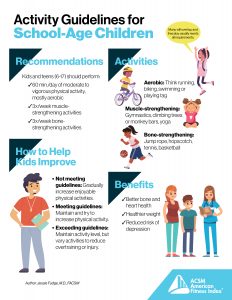
Activity Guidelines for School-Age Children InfographicPhysically active children have lower rates of obesity in childhood, and a lower risk of obesity and chronic medical conditions in adulthood. In addition, higher levels of physical activity improve cognition, executive function, attention and academic performance. Increasing physical activity in schools through daily recess, physically active classroom lessons, longer or more frequent physical education classes and before- and after-school activities helps children reach physical activity guidelines and build the foundation of a healthy lifestyle into adulthood 

Fortunately, 93 of the 100 largest U.S. cities (listed in the ACSM American Fitness Index®) are located in states that require physical education* in elementary, middle and high school. This ensures millions of children learn how to be physically active for a lifetime. Families should also be encouraged to stay active as a family, provide opportunities for free play, participate in active transportation and limit screen time. My kids were happier, slept better and were more engaged when the parks opened back up, they went back to school and they had much less computer time. 

The extra time needed to increase physical activity both in school and after school is easily made up for with improved concentration, attention span and academic performance. Utilizing school-based physical activity programs has never been more important!

Download the infographic. 

Author: Jessie Fudge, M.D., FACSM, Kaiser Permanente Washington 

*The Fitness Index’s physical education indicator is based on state-level policies requiring a minimum amount of physical education for all schools in the state. Policies are coded 0-3 depending on the amount of physical education required. States requiring physical education at all three grade levels (elementary, middle, and high school) are given the highest score. Two states represented in the Fitness Index were coded zero for having no state policy requiring physical education: Colorado and Hawaii. 

The Cost of Mental Health: Seeking Community Solutions

Good mental health is effective functioning in daily activities resulting in good productivity (e.g., work, school), healthy relationships and the ability to cope with adversity. A threat to good mental health is mental illnesses, which are health conditions involving changes in emotion, thinking or behavior (or a combination of these). Those experiencing mental illness may have difficulties functioning in social, work or family activities. Millions of Americans are affected by mental illness each year. Approximately one in five (20%) U.S. adults experience mental illness each year, with one in 20 experiencing a severe mental illness yearly. The great news is that mental illness is treatable, with most people continuing to function in their daily lives despite their mental illness.

Of the millions of U.S. adults experiencing mental illness in 2020, only 46% received treatment, leaving millions to deal with their mental diseases alone. Those dealing with depression have a 40% higher risk of developing cardiovascular and metabolic disease than the general population. People with serious mental health illnesses are twice as likely to develop these same health complications. On the community level, it is estimated that almost 21% of the people experiencing homelessness have at least one serious mental health condition. And of those incarcerated, approximately 37% have a diagnosed mental illness. Untreated mental illnesses have a devastating impact on a person’s physical health and economic health, as serious mental illness accounts for $193.2 billion in lost earnings every year. With so much at stake, the solution appears to be simple—increase the percentage of people receiving mental health treatment.

Unfortunately, of the almost 330 million people living in the U.S., 148 million (45%) live in a designated Mental Health Professional Shortage Area, placing these individuals at considerably higher risk of experiencing the ripple effects of mental illness. With so many not having ready access to mental health services, community mental health centers are critical to meeting the demand for mental health treatment. Community mental health centers are community-based and provide mental services, often as an alternative to hospitals. These community centers are mainly funded by federal, state and county programs. Local governments, which allocate funds to various programs on their level, are often forced to decide where the limited funds are given. Community mental health centers need to be prioritized for funding, considering the effects of poor mental health on the individual and community.

In addition to the mental health professional shortage areas, there is a shortage of providers. The lack of providers has caused many people not to be able to receive treatment, even when proactively seeking it out. Many adults will simultaneously experience a substance use disorder with mental illness, often as a coping mechanism. The shortages of mental health professionals have resulted in inadequate access to treatment, at an alarming rate of 11% of individuals in need of substance abuse treatment receiving treatment. Mental health professionals commonly found in community health centers include social workers, psychiatrists, counselors, psychologists and peer support specialists. With funding shortages, community centers cannot hire professionals that can be of service to the community member. Some community centers also serve as assertive community treatment centers, where they provide services for mental health and offer housing assistance, financial management and employment services for the community members.

In 2014, the Protecting Access to Medicare Act of 2014 created the concept of certified community behavioral health clinics, which provide comprehensive mental health and substance use services to individuals, often at no cost. In 2021, new federal funding aimed to expand the number of certified community behavioral health clinics to 340. Local officials should encourage the community centers in their areas to adjust to meet the guidelines set forth to establish themselves as a certified community behavioral health clinic. With funding a constant issue for local municipalities, any investment in community mental health centers can also be cost-saving for other more expensive programs.

Author:  Alvin L. Morton III, M.S., Doctoral Candidate, University of Tennessee at Knoxville